If you're involved in a crash with three or more vehicles, one of the first questions you'll ask is: whose auto insurance pays in a multi-car accident? Unfortunately, the answer isn’t always simple.
With multiple drivers, conflicting stories, and different state laws in play, figuring out who’s responsible and who covers the damages can get complicated fast.
In this guide, we’ll walk you through how insurance companies determine fault, how different types of coverage apply, and how state laws can impact your ability to recover damages. You’ll get the information you need to protect yourself and understand what to expect during the claims process.
How Does Insurance Work in a Multi-Car Accident?
In a multi-car accident, insurance companies must determine who caused the crash or whether fault is shared before deciding who pays for the damages.
Insurers start by collecting evidence to reconstruct what happened. This may include:
- Police reports, which often include the responding officer’s assessment of fault
- Dash cam or traffic camera footage, which can show the sequence of impacts
- Witness statements, which help fill in gaps between vehicle positions and actions
- Vehicle damage and skid marks, which can indicate speed, direction, and impact points
Each insurance company may reach different conclusions, especially when multiple drivers share blame.
Insurance Coverages That Matter in a Multi-Car Accident
Some coverages protect others from damage you cause; others help you recover when fault is unclear or another driver can’t cover your losses. If you're unfamiliar with the following terms, this guide to car insurance terminology can help clarify what each coverage means.
Liability Coverage
- What it covers: Damage or injuries you cause to others.
- When it applies: If you’re found at fault, your liability insurance pays for the other driver’s costs, up to your policy limits.
Collision Coverage
- What it covers: Damage to your own car, regardless of who’s at fault.
- When it applies: Useful in multi-car accidents when fault is disputed or the at-fault driver’s insurance doesn’t fully cover your losses.
Uninsured/Underinsured Motorist (UM/UIM)
- What it covers: Your injuries and damages when the at-fault driver doesn’t have enough (or any) insurance.
- When it applies: In hit-and-runs or if another driver doesn’t have enough coverage to pay for your losses.
Medical Payments (MedPay) or Personal Injury Protection (PIP)
- What it covers: Medical expenses for you and your passengers, no matter who caused the accident.
- When it applies: Right away, without waiting for a liability decision. Especially helpful in states with strict fault laws.
Rental Reimbursement Coverage
- What it covers: The cost of a rental car while your vehicle is being repaired.
- When it applies: After an accident, if you’re waiting for a claim to be processed or repairs to finish.
Comparative vs. Contributory Negligence: Why Your State Matters
As a Maryland-based agency, we regularly work with clients who commute across state lines into Virginia, D.C., Pennsylvania, or Delaware. And when you're involved in a multi-car accident, your ability to recover damages depends heavily on how the state you're in handles fault.
1. Comparative Negligence
Comparative negligence allows multiple drivers to share responsibility.
Your compensation is reduced by your percentage of fault. If you're 20% at fault in a $10,000 claim, you may receive $8,000.
Pennsylvania and Delaware follow a modified comparative negligence rule. You can recover damages only if you're 50% or less at fault.
2. Contributory Negligence
Contributory negligence is stricter. If you're even 1% at fault, you may be barred from recovering anything. This rule applies in Maryland, Virginia, and D.C.
Because fault laws vary by state, crossing state lines can drastically change how your claim is handled.
How Fault and Insurance Apply in Multiple Car Accident Claims
Who pays for what? The answer depends on how the accident happened, who was at fault, and what kind of coverage each driver has.
Insurers and investigators look at the sequence of events to decide:
- Who caused the initial impact?
- Did other drivers contribute to the outcome?
- Were any actions unreasonable or avoidable?
Fault in a multi-car accident is rarely straightforward. One driver might cause the initial crash, but others can still share responsibility based on how they reacted, or failed to. Even the question of how much fault each driver holds can be difficult to pin down.
Take this example, for instance:
Car A suddenly merges into traffic without signaling. Car B swerves to avoid a collision and ends up hitting Car C in the next lane.
Even though Car A didn’t make contact, they may still be considered at fault for causing the situation. Car B might also share some responsibility depending on how they responded.
If Car A is identified and found at fault, their liability insurance may cover Car C’s damages. If not, Car C may need to rely on UM/UIM coverage. Car B may use collision or MedPay/PIP to cover their own losses while fault is being sorted out.
This is why having the right coverage and understanding how fault is determined can make all the difference in how smoothly your claim is resolved.
What If You're Not at Fault in a Multi-Car Accident?
Even if you didn’t cause the accident, that doesn’t always mean you’ll be compensated quickly.
If another driver is clearly at fault, their liability insurance should pay for your property damage, medical costs, and related expenses up to their policy limits. But when multiple drivers are involved, fault can be unclear or shared, and insurers may push back on paying right away.
When there’s a delay in determining fault, you may need to rely on your own coverage first, especially if you have:
- Collision coverage to repair your vehicle
- Medical Payments (MedPay) or PIP to cover medical expenses
- Rental reimbursement while your car is in the shop
If your insurer pays you upfront, they may later try to recover those costs from the at-fault driver’s insurer through a process called subrogation, essentially stepping into your shoes to seek reimbursement.
When to File a UM/UIM Claim
If the at-fault driver is uninsured or underinsured, or if a driver flees the scene, you can file a Uninsured/Underinsured Motorist (UM/UIM) claim. This coverage steps in to cover your medical costs, lost wages, and sometimes vehicle repairs, depending on your policy.
How to Protect Yourself Before and After a Multi-Car Accident
You can’t always prevent a crash, but you can be prepared. Taking the right steps both before and immediately after a multi-car accident can make a major difference in protecting your finances, your health, and your ability to recover damages.
Immediate Steps to Take After a Crash
If you’re in a multi-car accident:
- Stay safe and call 911. Move to a safe location if possible and report the accident right away.
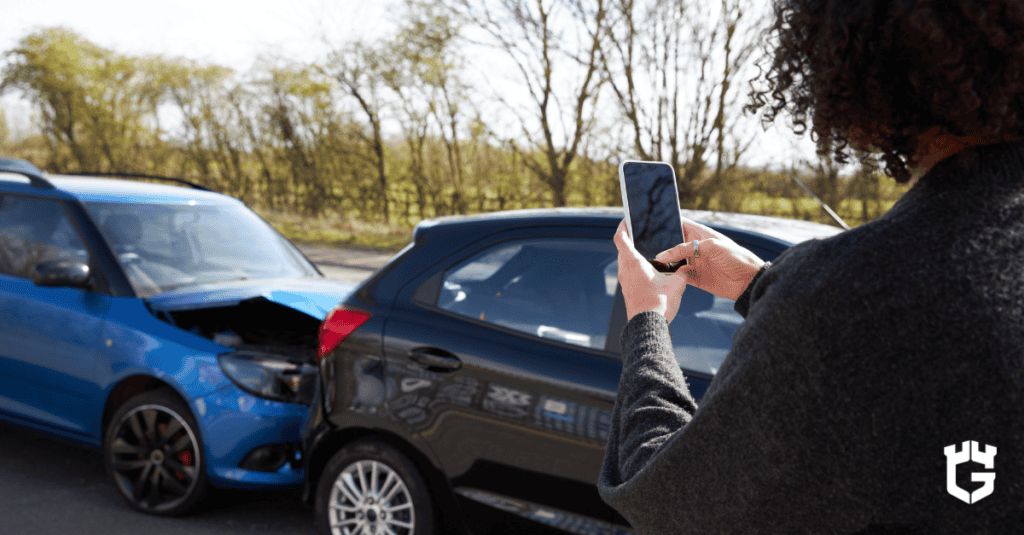
- Photograph everything. Take clear pictures of all vehicles, license plates, damage, skid marks, and the surrounding scene.
- Exchange information. Collect the names, insurance details, and contact information of every driver involved, along with any witnesses nearby.
These details will be critical for investigators and insurers, especially when fault is disputed.
Prepare Your Policy in Advance
In a multi-car crash, having the right protection matters.
- Review your declaration page. Make sure your policy includes adequate liability limits and supplemental coverage like UM/UIM and MedPay or PIP.
- Consider increasing your limits. Minimum coverage often isn’t enough in multi-car claims. Raising your limits is usually more affordable than people expect, and can save you from paying out of pocket.
- Add collision and rental reimbursement if needed. These optional coverages step in when other drivers’ insurance isn’t enough, or when the claims process drags out.
Stay Organized During the Claims Process
Save all repair estimates, receipts, and medical bills related to the accident. If you miss work, track lost wages with pay stubs or a note from your employer. Keeping a dedicated folder, whether physical or digital, can make it easier to submit documentation and get reimbursed.
Know Your Rights, Know Your Coverage
Navigating the aftermath of a multi-car accident is overwhelming, especially when fault isn’t clear and coverage questions start piling up. At Gerety Insurance, we understand how confusing these situations can be, and we’re here to help you feel prepared.
Whether you’re unsure what your current policy covers or want to ensure you’re not missing anything important, our team is happy to review it with you. A quick policy review can go a long way in giving you peace of mind.
If you have questions or want a second look at your coverage, reach out anytime. We’re local, we’re responsive, and we’re always here to help.